
Camp Snap 2 Review: The Camera That Takes the Pressure Off
Can a camera with no screen actually make photography more enjoyable? I took the Camp Snap 2 out to find out.
Disclosure: Camp Snap supplied this camera for me to try. This article also includes an affiliate link: I may earn a commission if you buy through it. The thoughts and conclusions below are my own.
now thats out of the way lets talk about the Camp Snap 2 Screen Free Digital Camera.
Sometimes, less really is more
There are cameras that give you almost unlimited control. Different lenses, manual exposure, RAW files, histograms and autofocus modes. And, of course, a screen that lets you check every photograph immediately after you've taken it.
Then there's the Camp Snap 2. You point it at something, press the shutter and that's it. There's no image preview to check your composition or zoom in to see whether you've nailed focus. Perhaps surprisingly, that's exactly what makes it interesting.
I've spent a lot of time checking the photograph I've just taken, changing my position and taking it again because I'm not quite happy with what I see. The Camp Snap removes that part of the process. I wanted to find out whether that simplicity changes the way I photograph.
What is the Camp Snap 2?
The Camp Snap 2 is a screen-free digital point-and-shoot camera that brings some of the simplicity of a disposable camera to digital photography. It doesn't use film, and you can recharge it and use it again.
These are the manufacturer's specifications, rather than results from my own battery or performance testing:
8MP sensor.
Six built-in filters: Standard, Vintage 1, Vintage 2, Vintage 3, Analog and Black & White.
On-camera filter selection, without an app.
USB-C charging and photo transfer.
Rechargeable battery rated for approximately 500 photographs per charge.
Pre-installed microSD card, with space for approximately 2,000 photographs.
A body described as 15% slimmer than the original Camp Snap.
30.5mm filter thread and a standard tripod mount.
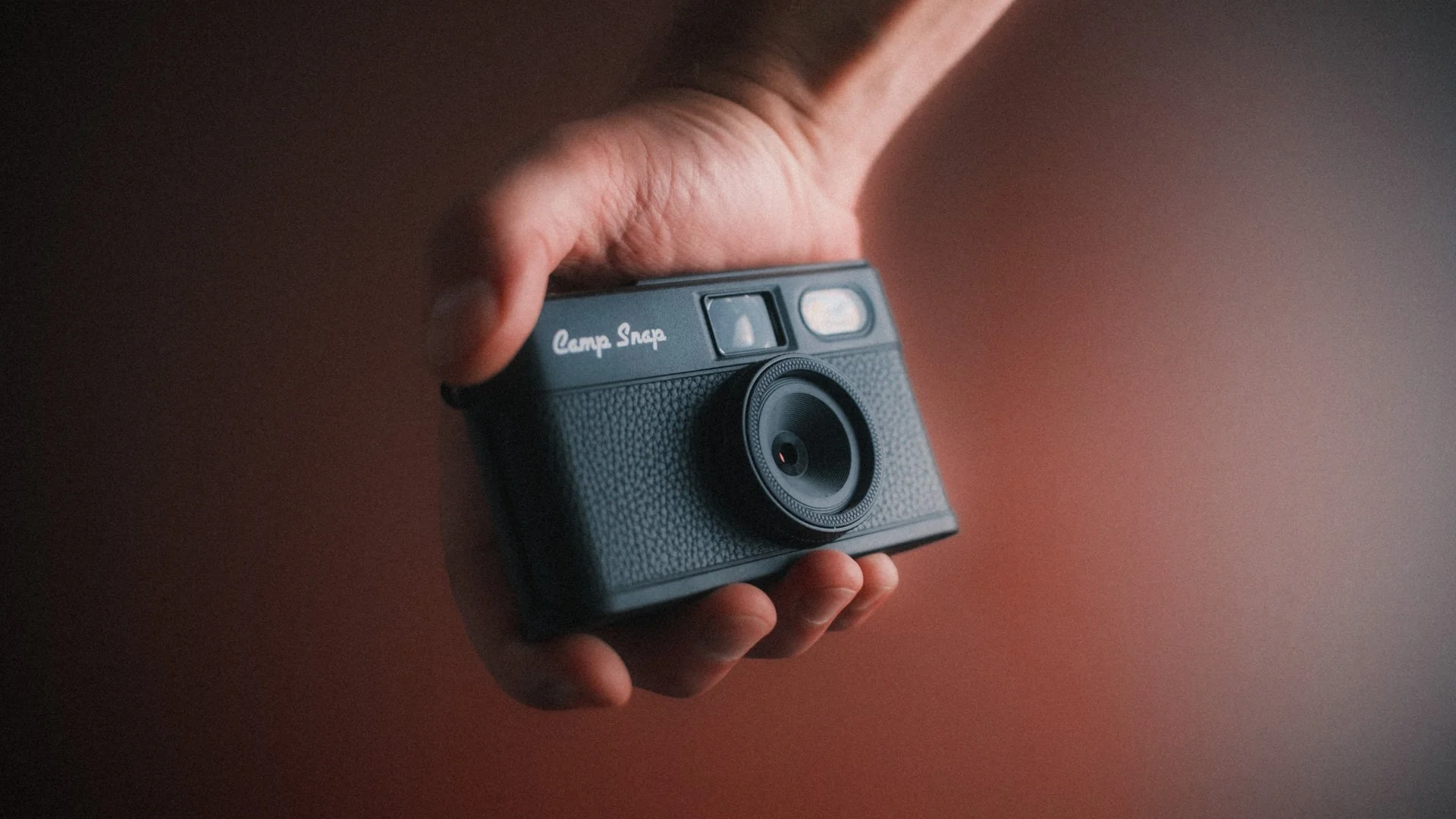
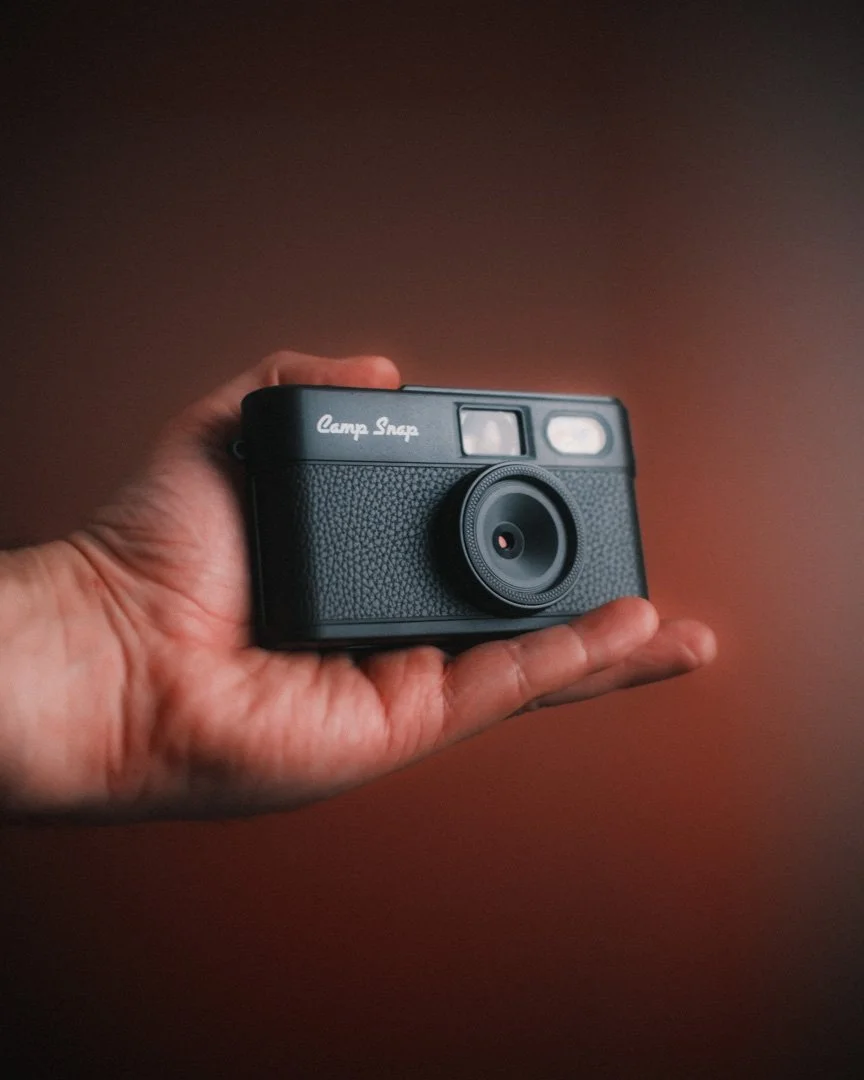
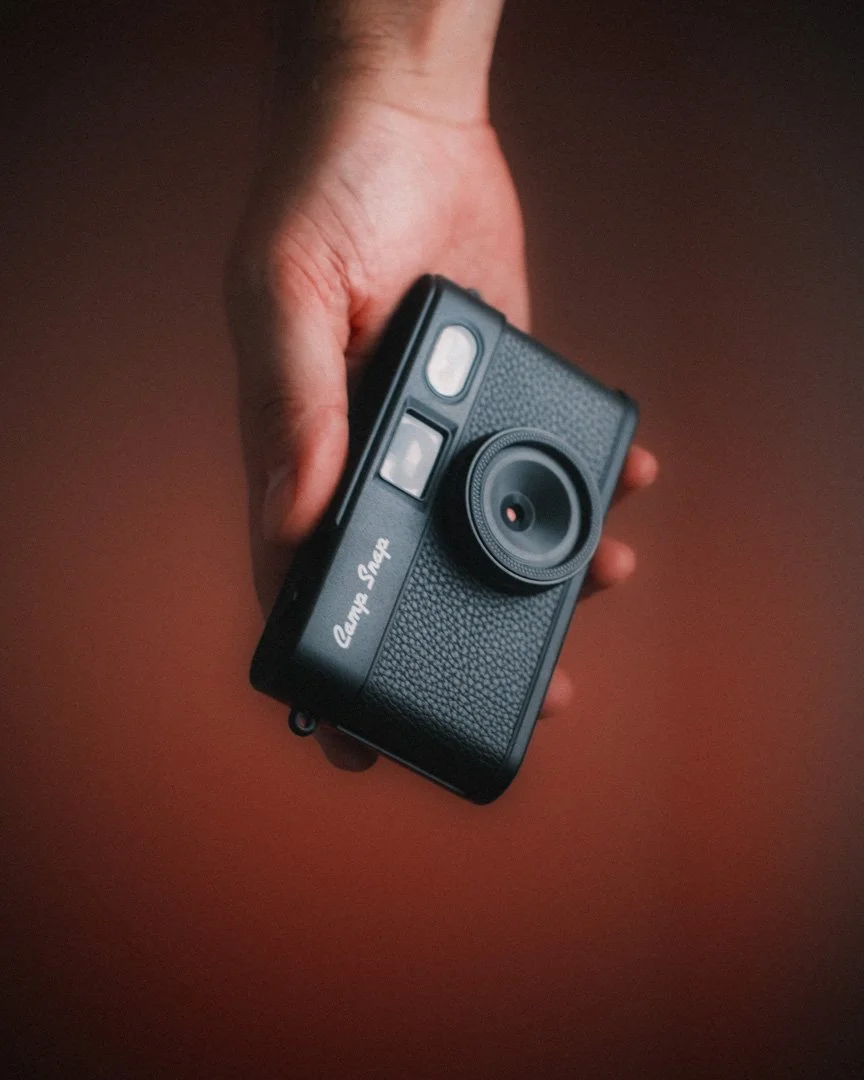
Handling: a camera I can carry without a plan
The first thing I noticed was how casually I could carry it. It's small enough to put in a pocket or bag without making the camera the centre of the day.
My Fujifilm X-S10 is my main camera. I love using it, but when I head out with it, I know I'm going out to photograph. There's intention behind carrying that setup. The Camp Snap feels different. I can take it with me without really having a plan, then make a photograph because something catches my eye.
What changes when you can't review your photographs?
This takes some getting used to. You take a photograph and no image appears on the back. You can't check whether someone blinked or decide immediately that you should try again. You carry on walking.
Initially, that feels slightly uncomfortable. We're so used to checking everything immediately that not knowing what we've captured feels unfamiliar. After a while, though, the process becomes much simpler:
See it. Photograph it. Keep moving.
One of my favourite things about using it is that uncertainty. I might think I've made a great photograph, or completely missed it. Later, a frame I barely thought about might turn out to be my favourite. It reminds me of using a disposable camera because there's a gap between making the photograph and seeing the result.
Camp Snap 2 image quality: what to expect
Daylight photographs
In good light, the Camp Snap can produce enjoyable images, particularly when I embrace the slightly imperfect look instead of expecting the files to behave like those from my Fujifilm. The photographs aren't technically perfect, but that doesn't automatically make them unsuccessful.
I wouldn't choose it for fine detail, substantial cropping or large gallery prints. For recording what caught my attention, I find the expectations around image quality much easier to let go of.
People and everyday moments
This is where the disposable-camera influence makes the most sense to me. Friends, family, a day out, somewhere I've visited or something funny that happened: those photographs don't always need exceptional sharpness or dynamic range. They're there because I was there.
I see it as a camera for recording a moment as much as creating a photograph. That distinction is a big part of its appeal.
Low light and other limitations
When the light gets difficult, the compromises become more apparent. I wouldn't choose it over my Fujifilm for demanding night photography, or for situations where I need dependable results and control over the exposure.
It also doesn't give me RAW files or the same flexibility in post-processing. There's less room to rescue a photograph afterwards, and no image preview to help me spot a problem while I'm shooting. That's a real trade-off, even when I enjoy the simpler experience.
The six built-in filters
The filters offer different looks without needing to use an app to change between them. That fits the camera's simple approach: choose a look and get on with photographing.
A film-inspired filter doesn't make the camera a film camera, though. For me, the disposable-camera feeling comes as much from waiting to see the photographs as it does from their appearance.
How do you get the photographs off the camera?
The Camp Snap 2 uses USB-C for charging and transferring photographs, and stores them on its supplied microSD card. A computer gives you a way to look through the images afterwards; a card reader is another option.
Camp Snap also lists direct transfer to compatible USB-C phones. Older iPhones with Lightning ports need a card-reader route instead. Check the manufacturer's guidance for your device before relying on direct phone transfer.
There isn't a film-development wait. I simply choose when to connect the camera and see what I've made.
Using the Camp Snap 2 for street photography
Street photography is something I already love, but walking with a camera that doesn't let me review everything feels different. I see something, raise the camera, make the photograph and keep walking. There's less time spent staring at the back of the camera and second-guessing myself.
It doesn't automatically make my photographs better. What it changes is how much attention I give to the frame I've just taken, rather than what's happening around me.
For a different approach with my usual equipment, my London night photography walk in the rain explores reflections, framing and working with changing light. The Camp Snap gives me a more casual way of noticing moments.
Who is the Camp Snap 2 for?
I think it makes sense for someone who wants a simple camera for days out and everyday memories, or a photographer who would enjoy stepping away from reviewing every frame. It's also worth considering if the experience of a disposable camera appeals, but you want something reusable.
I wouldn't recommend it to someone whose main priority is technically strong image quality, manual control, RAW editing or dependable performance in difficult light. If those are your priorities, the limitations will matter more than the simplicity.
Final thoughts: the camera that takes the pressure off
It won't replace a professional camera. But it isn't supposed to.
When I head out with my “professional” camera, there's an unspoken pressure that every photograph has to be a banger. I've got the Fujifilm, I've got the lens and I've gone out specifically to photograph. Surely I should come home with something amazing?
That mindset can creep in without me realising it. With the Camp Snap 2, I don't have the same expectations. I'm making photographs, recording moments and creating memories, much like we used to with disposable cameras.
I think there's something empowering about that freedom. It gives me permission to photograph something just because I like it, without worrying about whether the result is technically brilliant.
The photographs might not be the sharpest. They might not have the best dynamic range. But if I look back at one in five years and remember where I was, who I was with and how that moment felt, I'd argue it has done its job.
My Fujifilm gives me the control to deliberately create the photograph I have in my head. The Camp Snap gives me a reason to record what happened. I want both of those experiences.
They're not the best images. But does it really matter?
Camp Snap 2 sample photo gallery
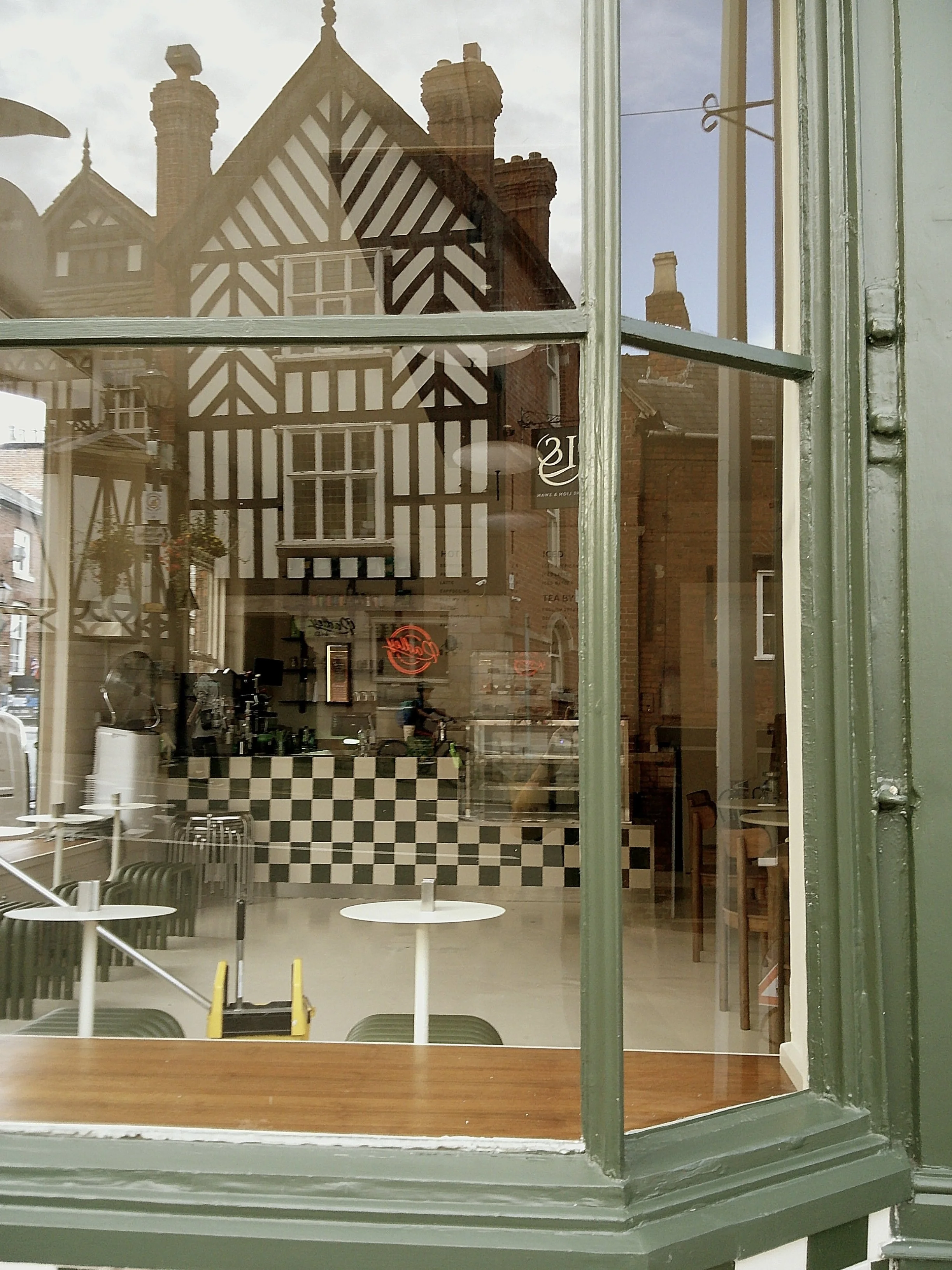
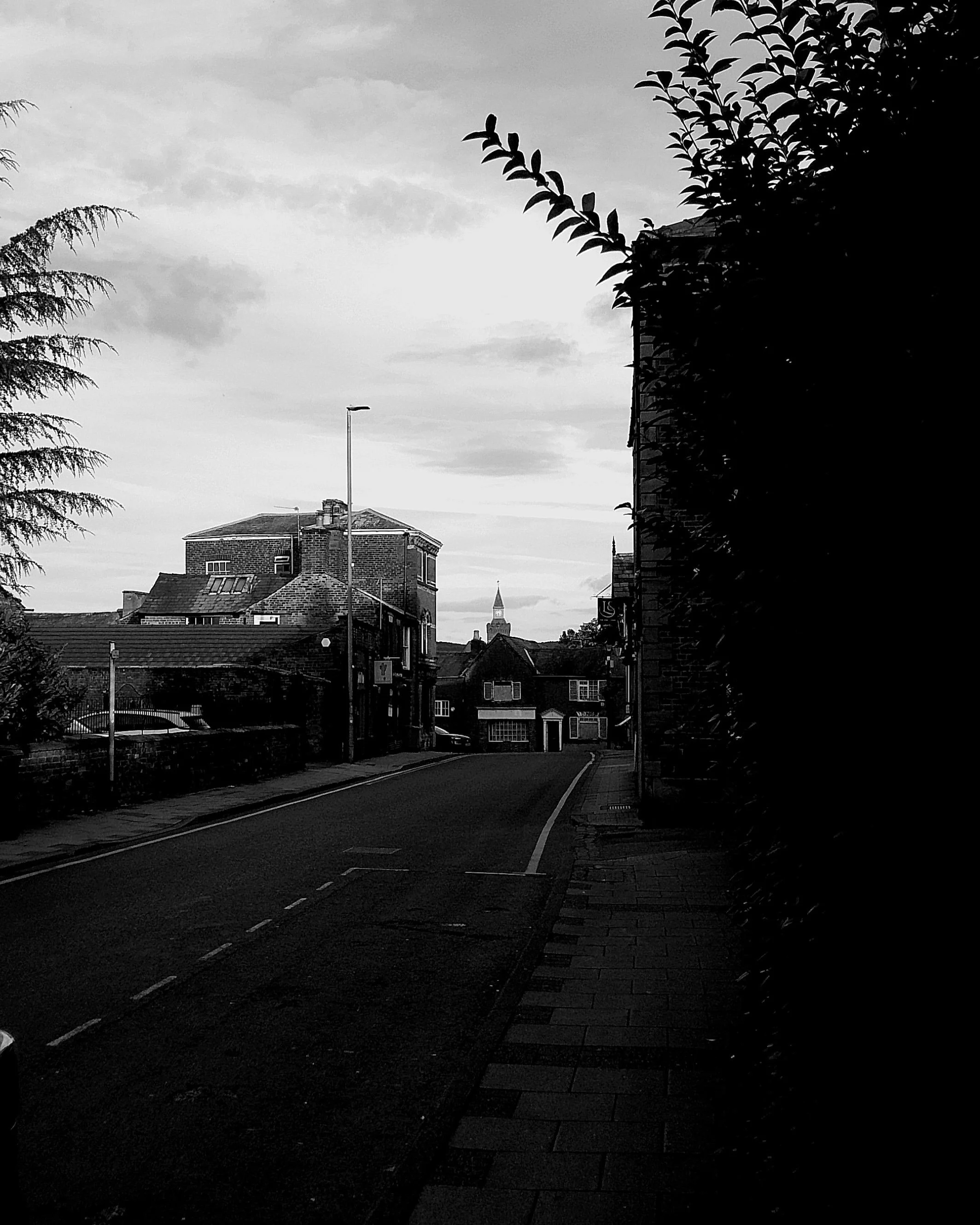
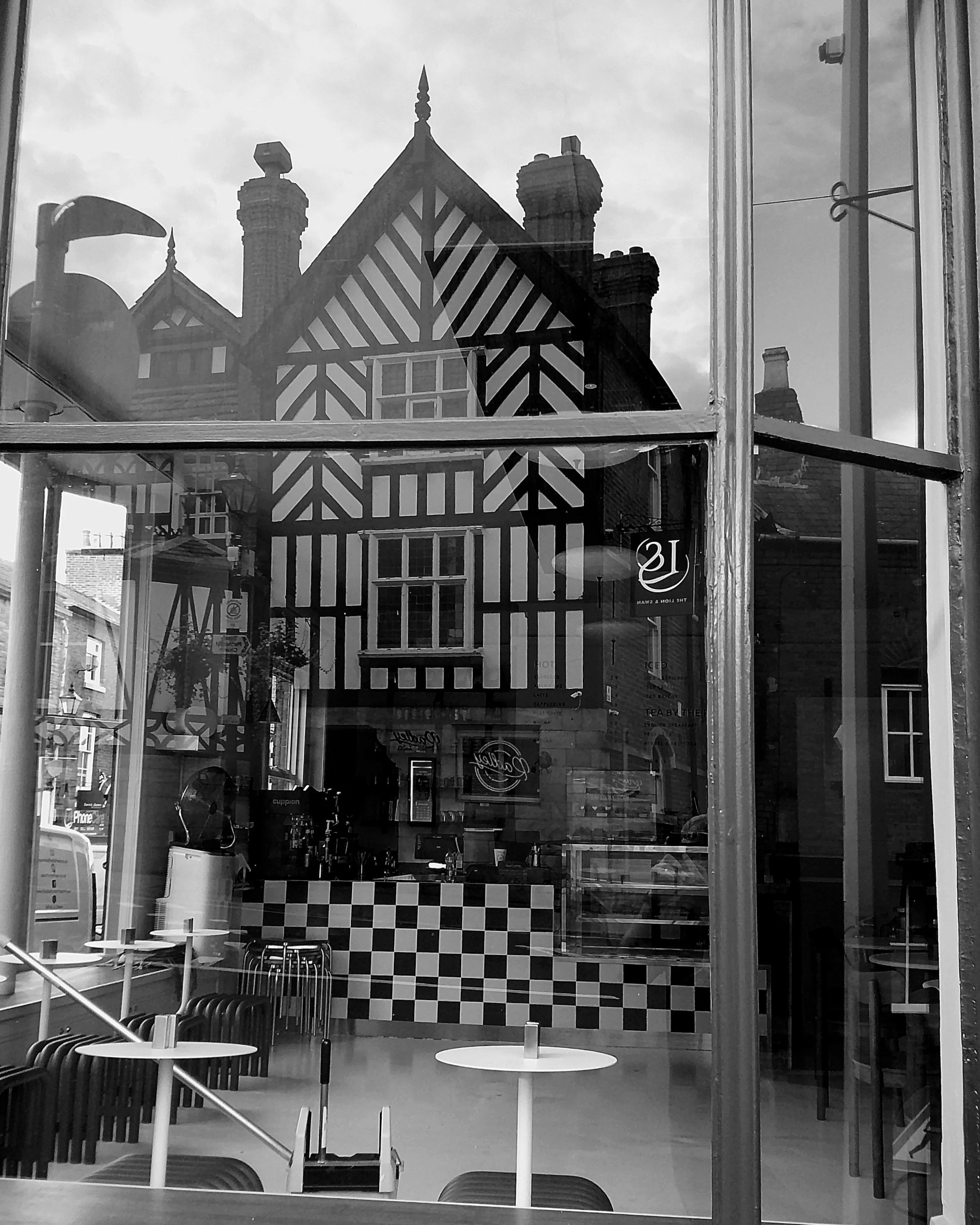
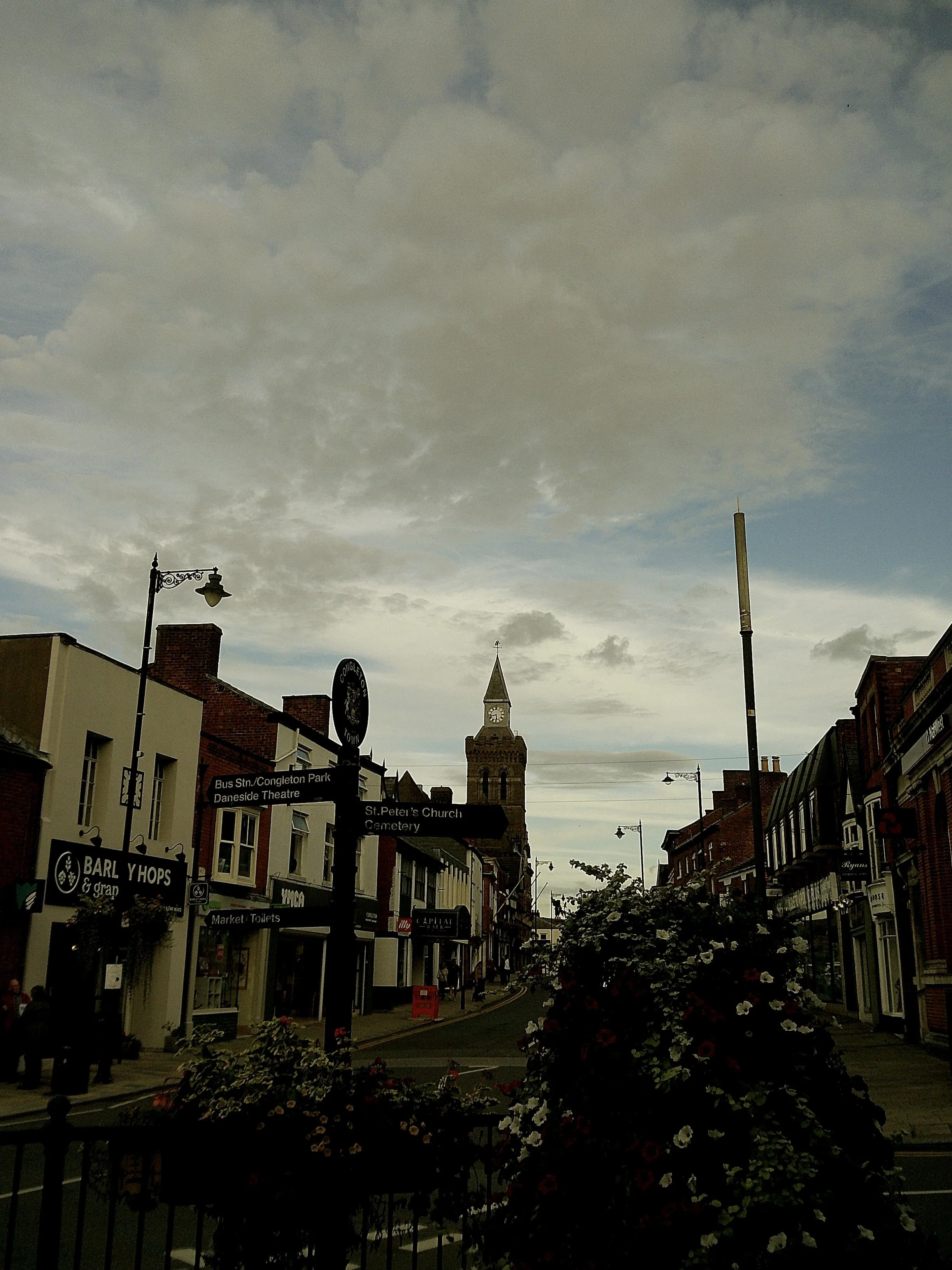
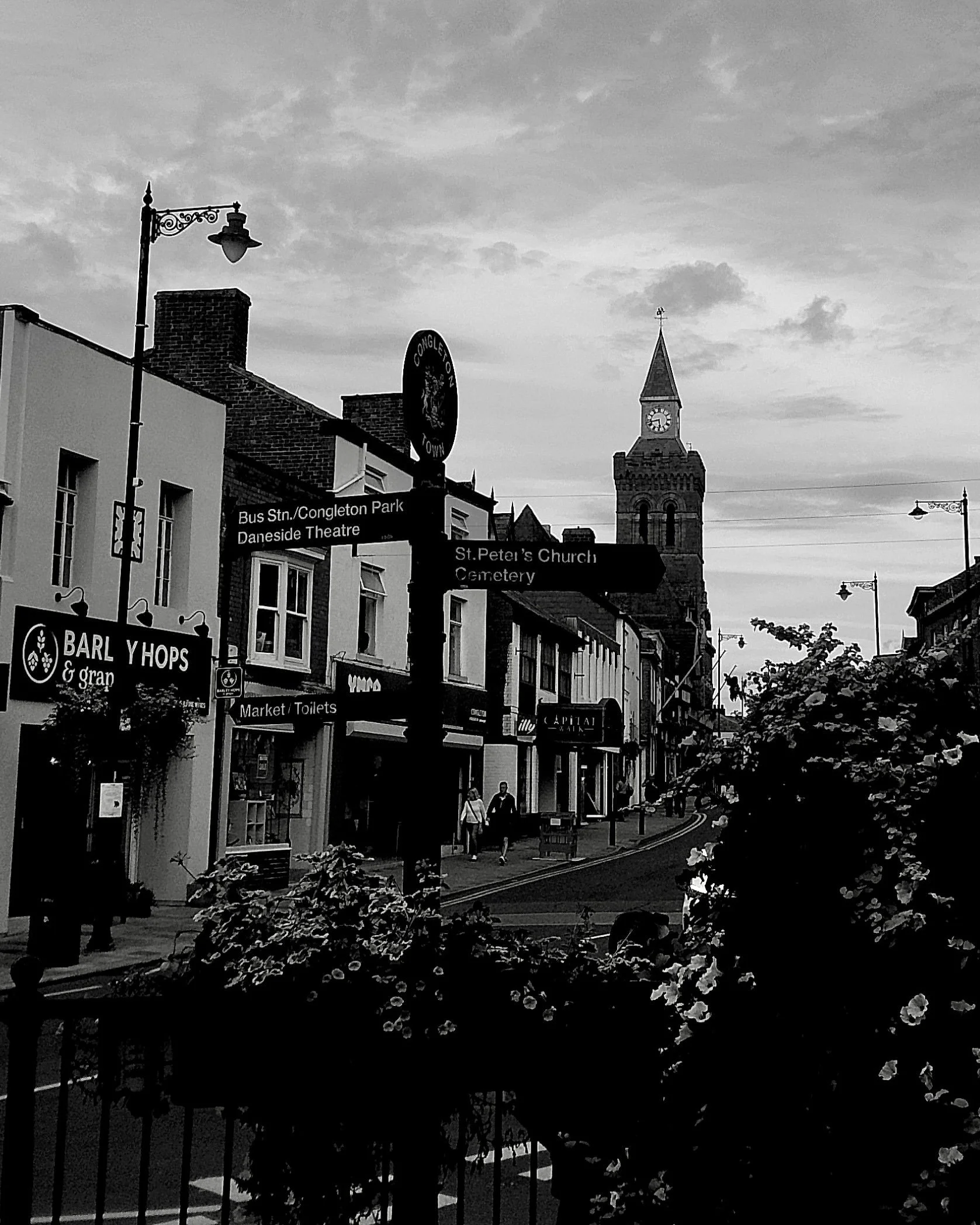
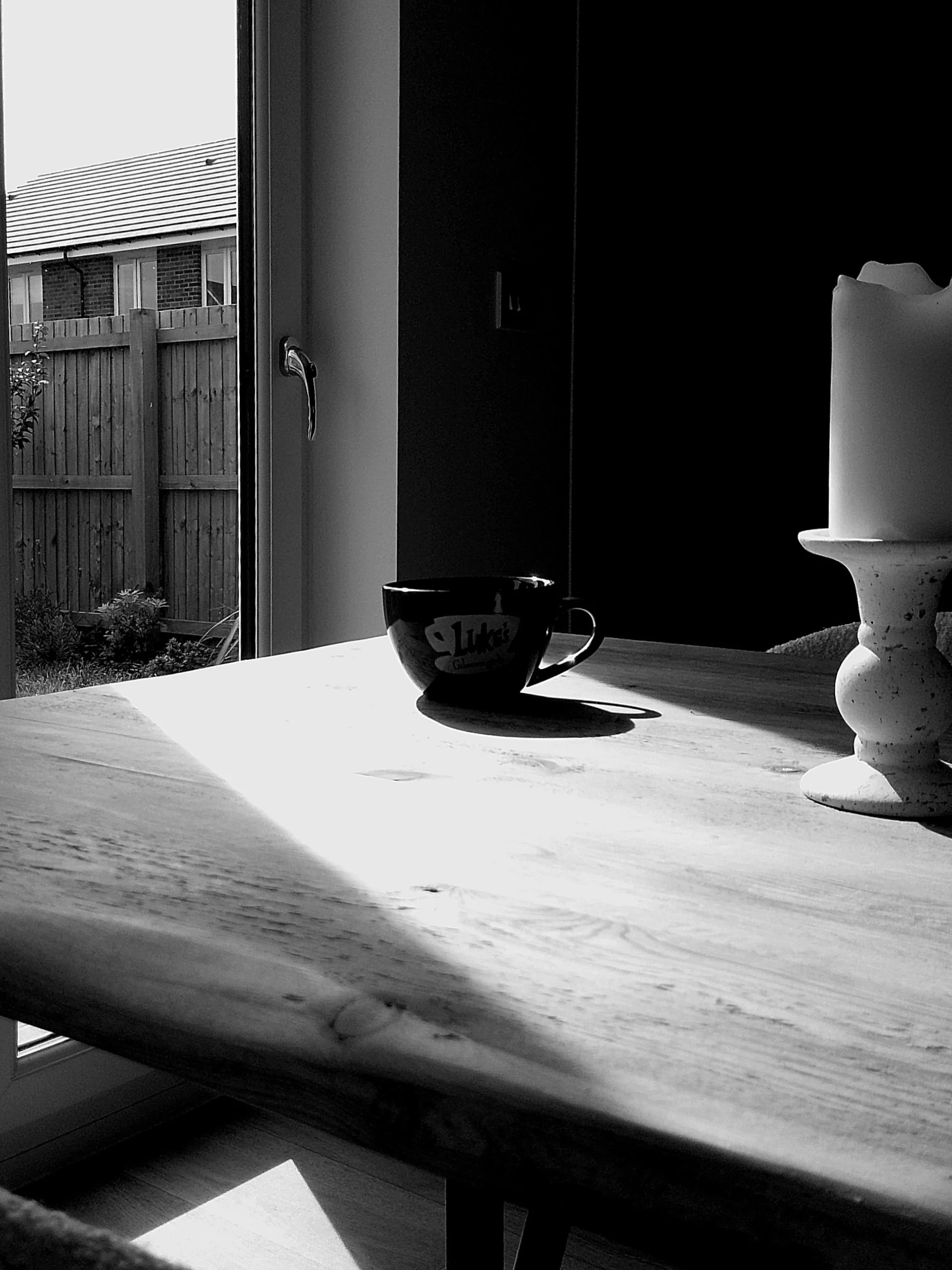
More images coming soon. I’ll add photographs from my time with the Camp Snap 2 here.
All images in this gallery are straight out of the Camp Snap 2, with no additional editing. Only slight cropping to fit the gallery.
Save $5 on a Camp Snap
If you fancy trying one yourself, you can save $5 using my Camp Snap affiliate link. I may earn a commission if you buy through it, which helps support Digisnapsss.